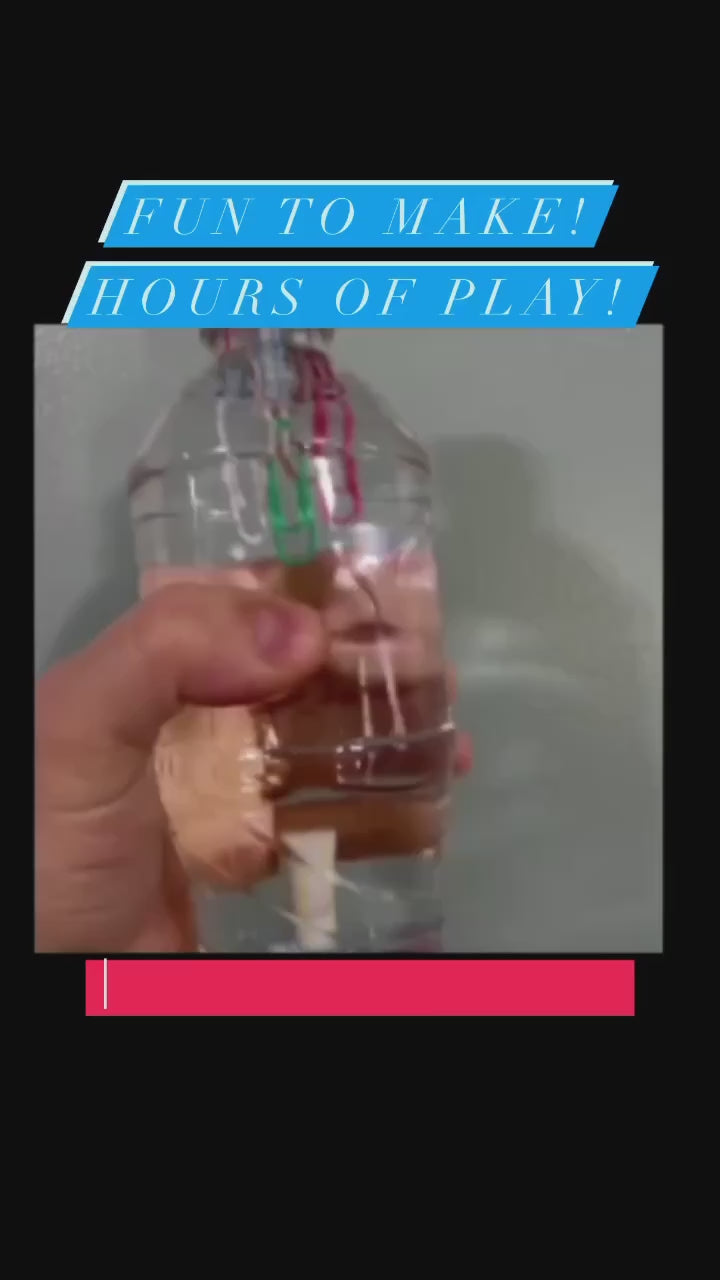
Bring physics to life with this exciting hands-on buoyancy science experiment using a classic Cartesian diver in a bottle STEM lab activity! Students will explore the concept of buoyancy, pressure, and density through a simple, engaging, and unforgettable demonstration.
This interactive science lesson helps learners see physics in action as they observe how squeezing a bottle causes a “diver” to sink—and releasing pressure makes it rise again!
🧪 What Students Will Do:
✨ Build a simple Cartesian diver using a bottle, straw, water, and paper clips
✨ Observe how pressure changes affect buoyancy
✨ Watch the diver sink and rise based on bottle pressure
✨ Make predictions, record observations, and draw conclusions
✨ Engage in real-world scientific thinking and experimentation
📘 Includes:
✔ Step-by-step hands-on STEM science experiment instructions
✔ Printable science journal pages
✔ Prediction, observation, and conclusion prompts
✔ Student recording sheets to support the scientific method
✔ Easy prep teacher-friendly activity
🧠 Science Concepts Covered:
- Buoyancy and density
- Pressure and force
- Scientific method (predict, observe, conclude)
- Physics fundamentals through hands-on learning
- Critical thinking and inquiry-based science
🎯 Perfect For:
✔ 2nd–6th Grade Science
✔ Homeschool STEM lessons
✔ Earth & physical science units
✔ Science centers and stations
✔ Sub plans and enrichment activities
✔ Hands-on experiential learning
💡 Why Teachers Love It:
This experiment transforms abstract physics concepts into a visual, hands-on STEM experience that students remember. It encourages curiosity, engagement, and scientific reasoning—all through a simple bottle experiment!
4 page PDF print file
🌟 Extend the Learning
Want more hands-on, video-based STEM science lessons like this one?
Explore our full 30 Science Experiment Mega Bundle (with labs + video lessons + printable journals) here:
👉 https://www.teachmetruth.com/courses/science-bundle